Syngas — a mixture of hydrogen and carbon monoxide — is a key raw material for methanol, synthetic fuels and many other chemicals. Today it is made mainly from natural gas. The EU-funded SOMMER project (Solar-Based Membrane Reactor for Syngas Production) aims to make it instead from captured CO₂ and water, using concentrated sunlight as the only energy source.
At the heart of the process is a ceramic membrane reactor. Heated by concentrated solar radiation to temperatures of up to 1,500 °C, a catalytically active ceramic membrane splits water and CO₂ molecules without any external electricity. The CO₂ would come from unavoidable emissions, such as those of cement plants.
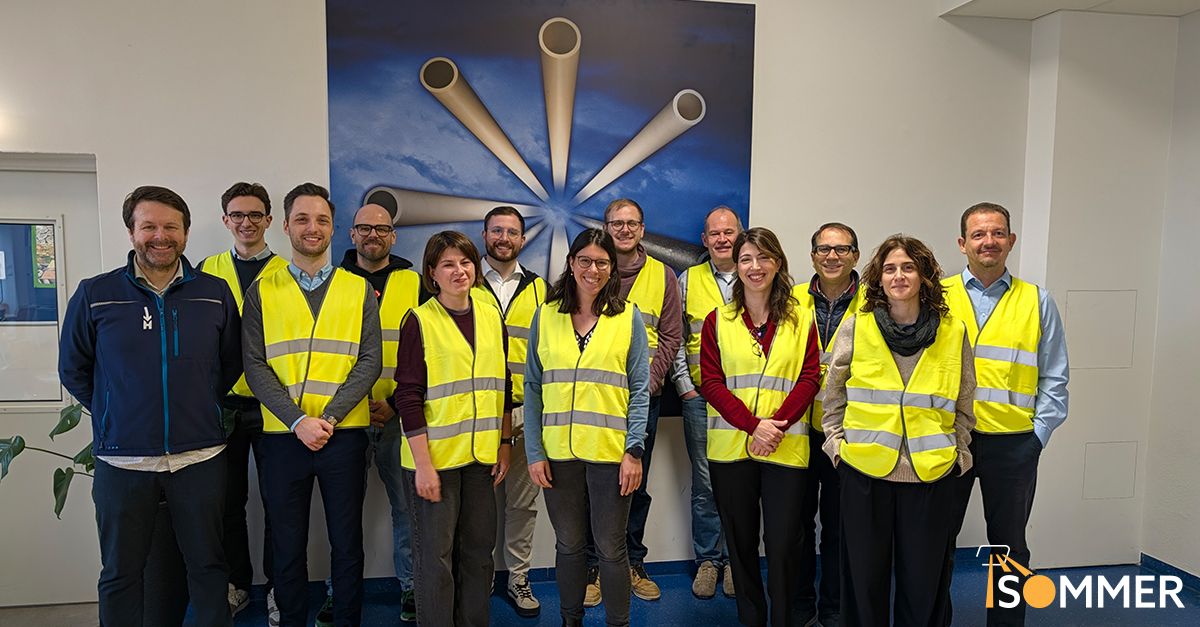
As the project enters its final year, the consortium met in Waldkraiburg, Germany, hosted by partner Morgan Advanced Materials Haldenwanger. Our group was represented by Natalia Kostretsova. Over two days, partners reviewed progress on:
- manufacturing high-performance ceramic membranes by extrusion and 3D printing;
- testing high-temperature sealants and measuring reaction rates at up to 1,500 °C;
- the first solar test of the membrane reactor configuration;
- techno-economic and life-cycle assessment;
- integrating the system into a cement plant.
Participants also toured Haldenwanger’s production of technical ceramics, including the extruded membrane tubes that will be tested under concentrated sunlight in a solar reactor at DLR.
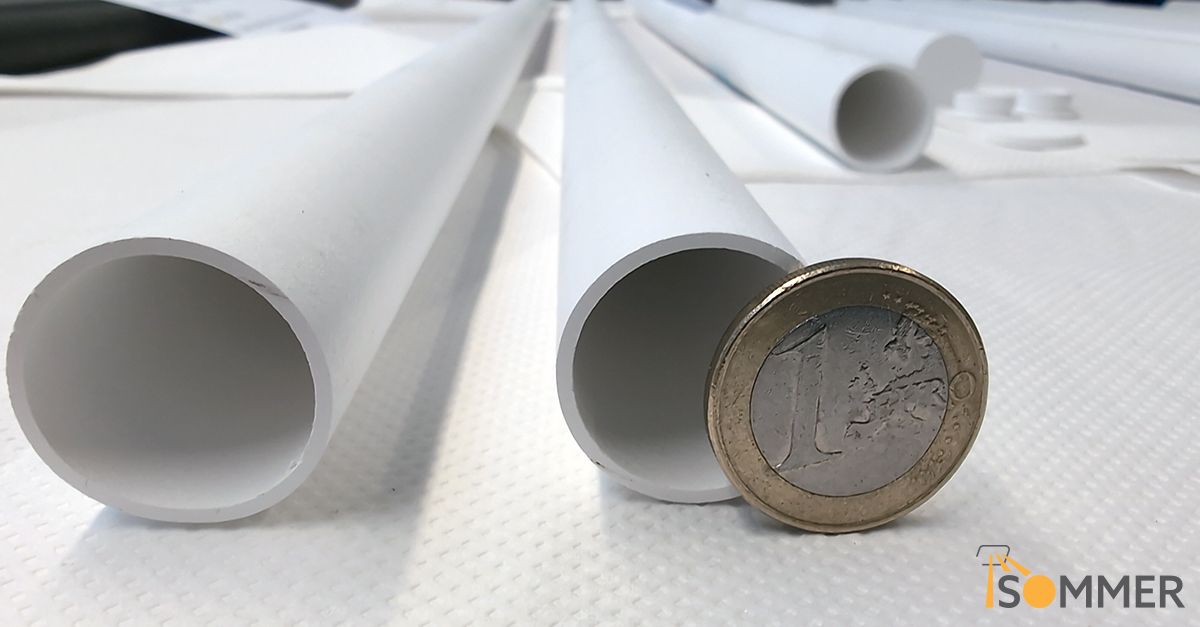
Our role. Within SOMMER, IREC uses 3D printing to develop new membrane geometries that increase the power density of the reactor, building on our work in advanced manufacturing of functional ceramics.
SOMMER (2023–2027) is coordinated by the DLR Institute of Future Fuels and brings together Forschungszentrum Jülich, IREC, hte GmbH, ITQ (CSIC-UPV), Morgan Advanced Materials Haldenwanger, TITAN Group and BASF.
Follow the project on LinkedIn.
Funded by the European Union under the Horizon Europe programme, grant agreement No 101118293. Views and opinions expressed are those of the author(s) only and do not necessarily reflect those of the European Union or the granting authority. Neither the European Union nor the granting authority can be held responsible for them.
