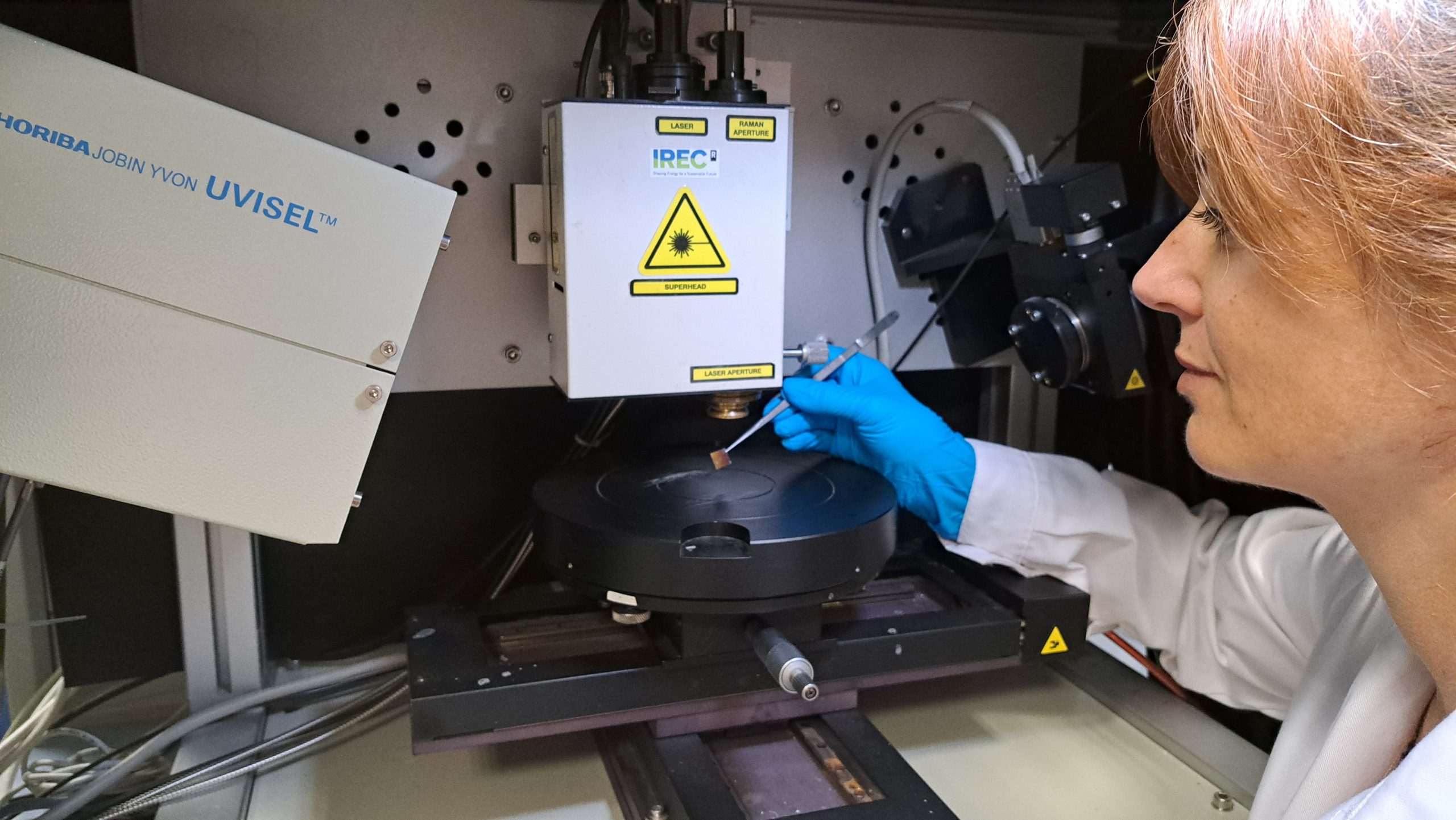
Optical components that can be tuned with a small voltage, and that keep their setting without a constant power supply, could cut the energy used in sensing and optical communications. The PHIDES project explored a new way to build them: moving oxygen ions inside oxide materials to change how they emit light.
The team studied yttria-stabilised zirconia (YSZ), a ceramic that conducts oxygen ions, doped with the rare-earth elements praseodymium and terbium. Changing the oxygen content of the material changed its light emission (photoluminescence). The effect was reversible and gradual (analog), and the material keeps its state once set (non-volatile).
The project also identified ways to speed up ion transport and took the first steps to integrate these materials into guided photonic structures. Together, the results establish photo-ionic control as a promising route to low-power, programmable light emitters and modulators.
- 2 peer-reviewed publications, 1 patent application and several conference contributions, including 2 invited talks
- Postdoctoral Research Award at the Photonics North 2026 conference for Alicia Ruiz-Caridad
- Outreach at Matins de Recerca, Festa de la Ciència and Científiques
PHIDES (Photoionic Light Modulators for Electrochromic Devices) was a Marie Skłodowska-Curie Postdoctoral Fellowship led by Alicia Ruiz-Caridad in our group, from September 2024 to August 2026. She will continue this research line at IREC with a Ramón y Cajal fellowship.
More information: CORDIS · IREC news
Funded by the European Union (project 101152905). Views and opinions expressed are however those of the author(s) only and do not necessarily reflect those of the European Union or the European Research Executive Agency (REA). Neither the European Union nor the granting authority can be held responsible for them.
