Our group coordinates SuMaCer, a European project to make ceramic components for fuel cells, electrolysers and batteries faster, cleaner and entirely in Europe.
Read moreSuMaCer: cleaner, smarter manufacturing for ceramic energy devices
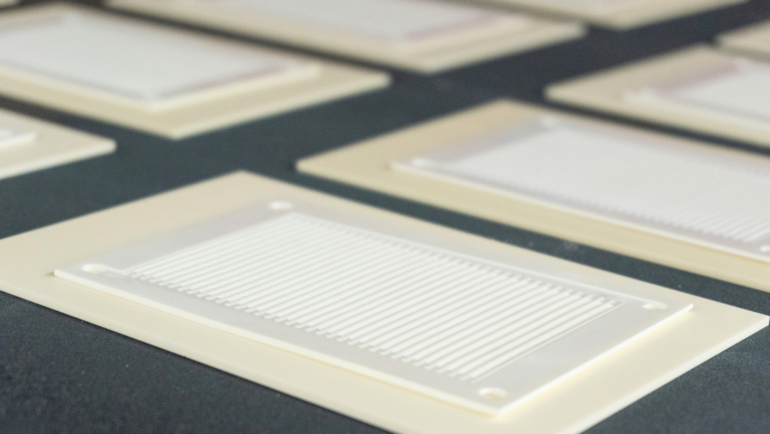
Our group coordinates SuMaCer, a European project to make ceramic components for fuel cells, electrolysers and batteries faster, cleaner and entirely in Europe.
Read more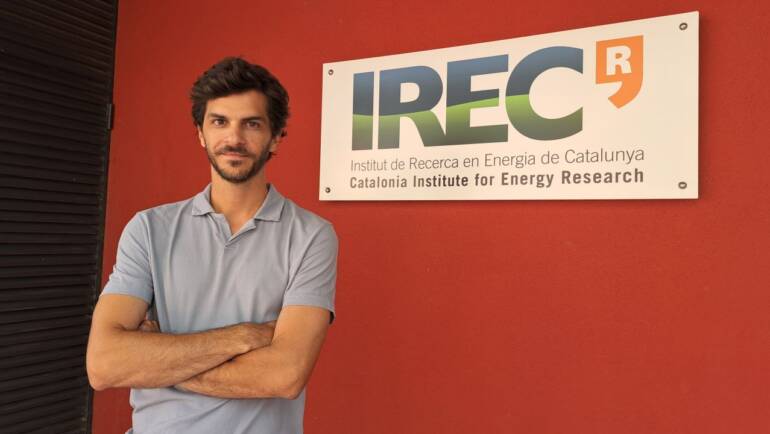
Francesco Chiabrera receives a €1.5 million ERC Starting Grant to develop TOPOIONICS, a research programme on solid materials that adapt like living systems for energy-efficient computing.
Read more
With a Joan Oró grant from AGAUR, Dominic Borgialli starts a PhD on using oxide ions to build brain-inspired, low-power computing devices.
Read more
Our group will lead three new projects funded by Spain’s Knowledge Generation programme: MONOLITH, SUCCESS and SELDON.
Read more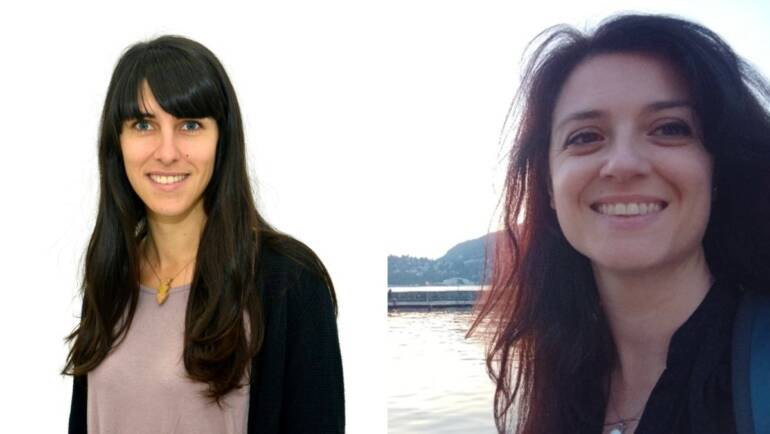
Lucile Bernadet and Alicia Ruiz-Caridad have been awarded five-year Ramón y Cajal fellowships to lead their own research lines in our group.
Read more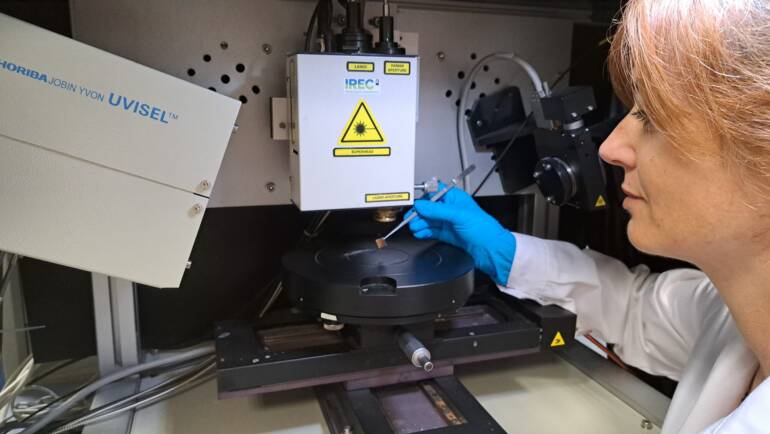
The PHIDES project showed that moving oxygen ions inside an oxide can tune how it emits light – reversibly, with small voltages and without constant power.
Read more
Our recent paper by F. Baiutti et al., “Current trends in solid state ionics: Defect engineering and surface chemistry,” has been selected as an Editors’ Choice article by Solid State Ionics. This proceedings-perspective focuses on three central directions in solid-state ionics – defect engineering, surface...
Read more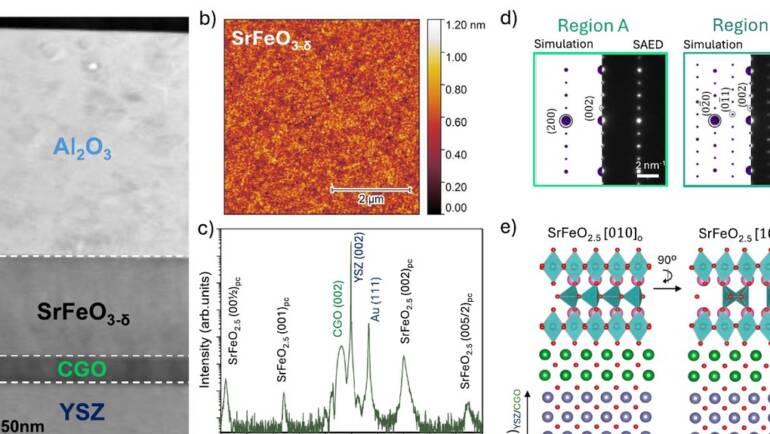
In Nature Communications, we show that strontium ferrite films can be held in stable intermediate states by finely tuning their oxygen content with a voltage.
Read more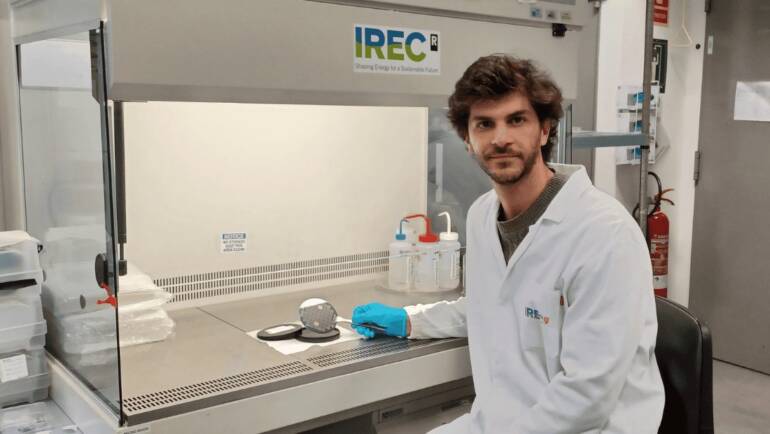
MagnOxy showed that inserting oxygen ions into oxide films can tune their magnetism reversibly – a step towards memories that also compute.
Read more
Adaptive biological systems dominate nature due to their flexibility. In contrast, human-fabricated electronic devices have limited flexibility and adaptability, as their functionality is mostly fixed during fabrication. Therefore, developing nature-inspired, stimuli-responsive devices has been a long-standing goal...
Read more
Accelerated mapping of composition-structure-property relationships is a central goal in current materials research. Advanced approaches leverage machine learning (ML) models on existing databases, including data mining from the literature. However, efficient and effective application of these ML models requires...
Read more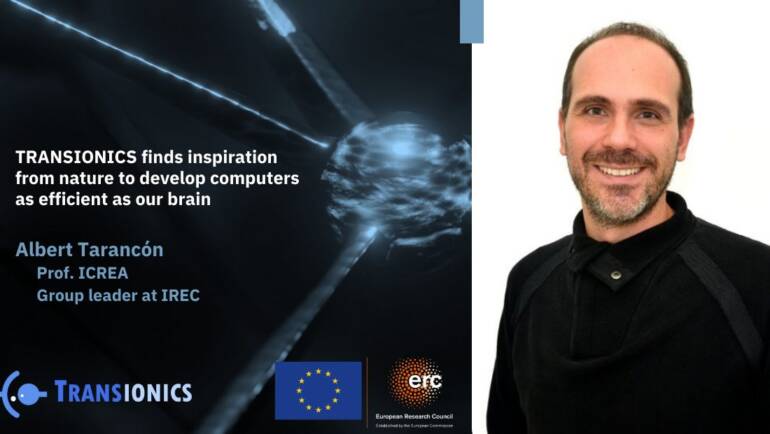
Albert Tarancón, Prof. ICREA and head of the Nanoionics and Fuel Cells group at IREC, has been granted an ERC-PoC project for TRANSIONICS (ID 101066321), devoted to Solid-State Ionics Synaptic Transistors for Neuromorphic Computing.
Read more