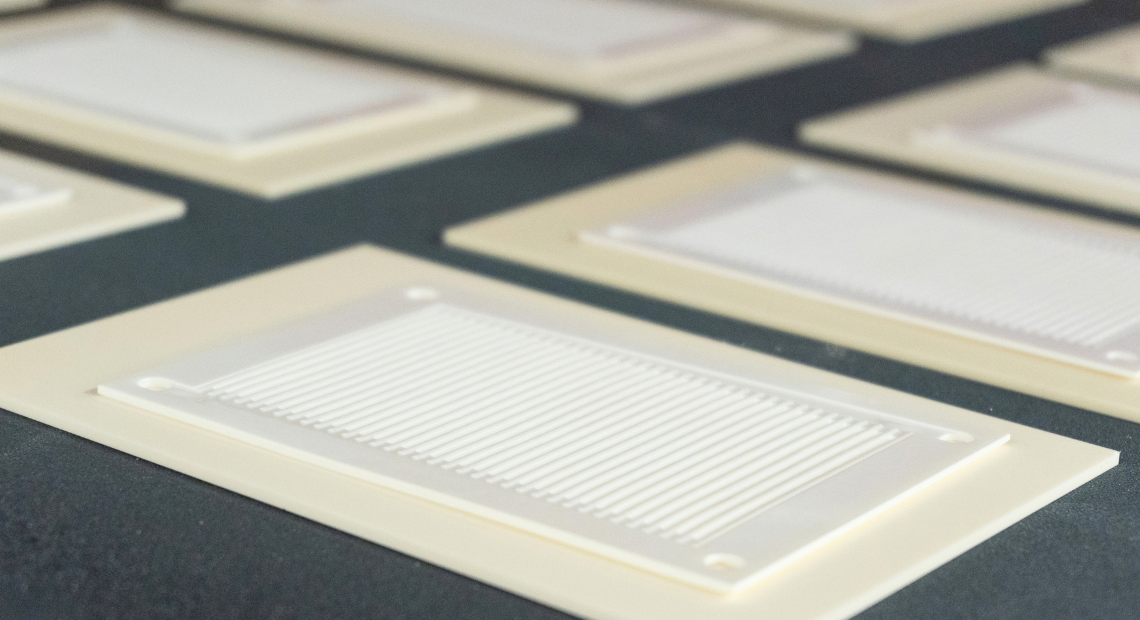
Fuel cells, electrolysers and next-generation batteries rely on functional ceramics: engineered ceramic materials that conduct ions or electrons. Today’s manufacturing methods for these components are slow and hard to control, which holds back their industrial uptake.
The European project SuMaCer, coordinated by IREC, will develop faster, cleaner and more digital ways to produce them entirely in Europe. It combines additive manufacturing (3D printing), digital twins (virtual replicas of the production process) and process optimisation.
The approach will be validated on three industrial-scale demonstrators: a solid oxide fuel cell (SOFC), a solid oxide electrolysis cell (SOEC) and a metal-supported sodium battery.
Our role. IREC coordinates the project, defines the manufacturing and system requirements, and develops manufacturing routes for the solid oxide cells and the sodium battery. The work is led by Marc Torrell from our group, together with Shanti Liga from IREC’s Technology Transfer department.
- Start: September 2026; duration 36 months
- 12 partners across Europe: research centres, hardware and software developers, product manufacturers
- Total budget: over €5 million
- Kick-off meeting: 8–9 October 2026, Barcelona
More information: CORDIS · IREC news
Funded by the European Union. Views and opinions expressed are however those of the author(s) only and do not necessarily reflect those of the European Union or the European Health and Digital Executive Agency (HaDEA). Neither the European Union nor the granting authority can be held responsible for them.
